5 Questions Every Stuart FL Homeowner Should Ask About Their Insurance Policy
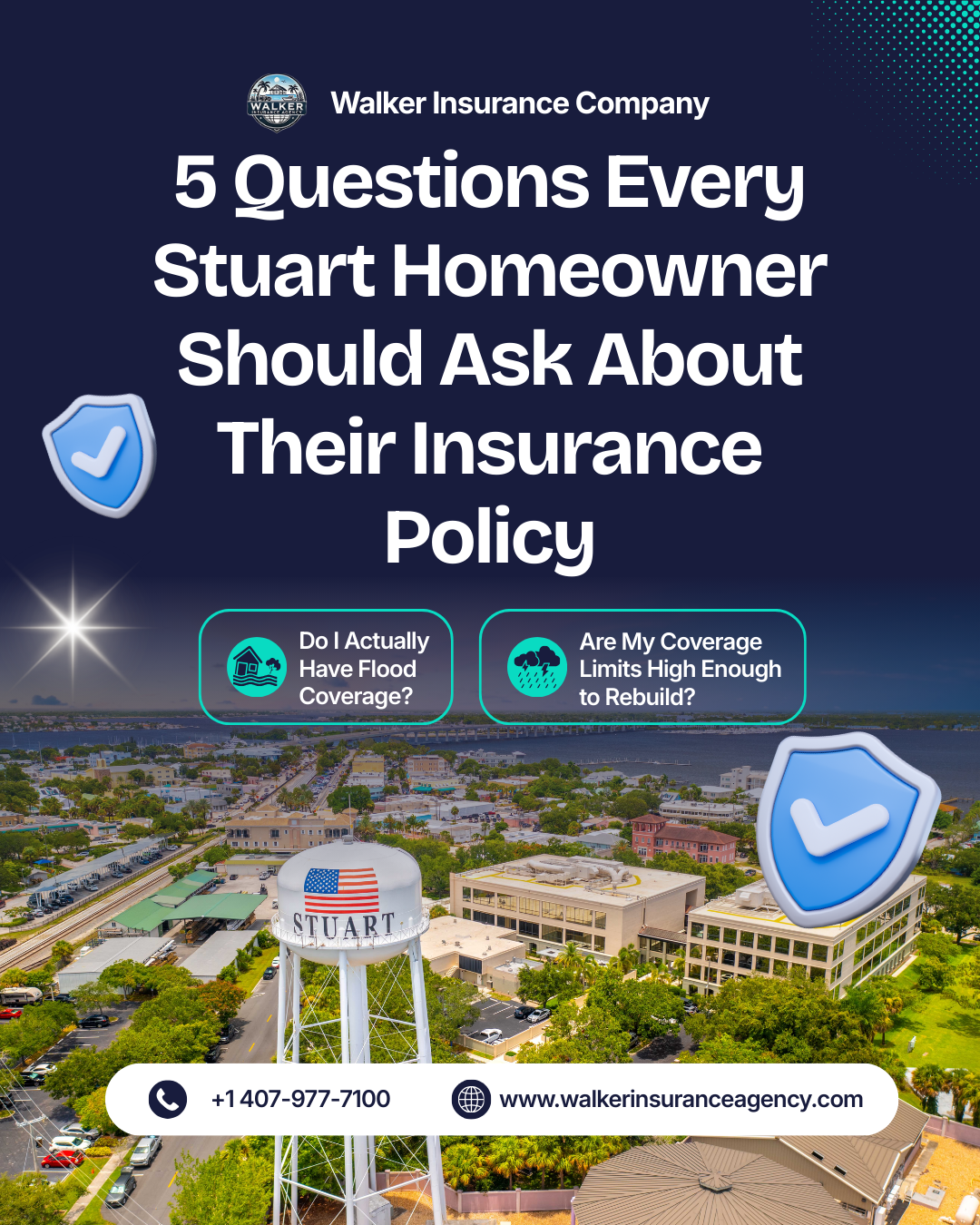
Before Hurricane Season in Stuart, Review Your Policy
If you own a home in Stuart, hurricane season isn’t just a date on the calendar — it’s a financial reality.
Many homeowners don’t discover gaps in their coverage until after a storm. By then, it’s too late.
Reviewing your homeowners insurance before hurricane season is one of the smartest risk management steps you can take.
Here are the five essential questions you should be asking.
1. Do I Actually Have Flood Coverage?
This is the most misunderstood issue in Florida insurance.
Standard homeowners insurance policies do not cover flood damage. That includes:
- Storm surge
- Rising water from heavy rainfall
- Overflow from nearby waterways
If your property is near coastal or low-lying areas in Stuart, separate flood insurance may be critical.
Don’t assume. Confirm.
2. Are My Coverage Limits High Enough to Rebuild?
Construction costs in Florida have increased significantly in recent years.
Ask yourself:
- Does my dwelling coverage reflect current rebuild costs?
- If materials and labor surge after a storm, would I be short?
- Do I have ordinance & law coverage if building codes change?
Underinsuring your home to save on premium can create a major financial gap later.
3. What Is My Hurricane Deductible — and Can I Afford It?
In Florida, hurricane deductibles are typically a percentage of your dwelling coverage, not a flat amount.
For example:
- 2% deductible on a $400,000 home = $8,000 out of pocket
- 5% deductible on a $400,000 home = $20,000 out of pocket
Many homeowners don’t realize how high that number actually is until they calculate it.
Make sure:
- You know your percentage
- You understand when it applies
- You have savings set aside if needed
4. Am I Fully Protected Against Windstorm Damage?
Wind coverage in Florida can vary depending on:
- Roof age
- Roof type
- Mitigation features
- Carrier guidelines
Some policies may limit roof payouts based on age or condition. If your roof is over 10–15 years old, this becomes even more important to review.
5. Could My Policy Be at Risk of Non-Renewal?
Florida’s insurance market has experienced carrier exits and underwriting tightening.
Ask:
- Is my roof within carrier age guidelines?
- Has my company reduced exposure in Martin County?
- Should I proactively shop 60–90 days before renewal?
Being proactive reduces last-minute stress.
If Insurance Feels Confusing, Start Here
If this process feels overwhelming, you’re not alone.
Read: Stuart FL Homeowners Insurance — Why It Feels So Stressful (And What You Can Control).
Considering switching advisors? See: Insurance Agent in Stuart FL — Why Relationships Matter More Than Price.
Clarity today prevents chaos tomorrow.
FAQ – Stuart FL Homeowners Insurance
Q: Is flood insurance included? A: Typically no. Flood insurance usually requires a separate policy.
Q: What is a hurricane deductible? A: It’s usually a percentage of your dwelling coverage and applies specifically to named hurricane events.
Q: How often should I review my policy? A: At least once per year, ideally 60–90 days before renewal and before hurricane season.
Q: Does roof age affect my insurance? A: Yes. Roof age and condition significantly impact eligibility, pricing, and coverage terms in Florida.
Final Thought
In Stuart, Florida, preparation is everything.
The homeowners who ask smart questions before hurricane season are the ones who sleep better when storms are forming offshore.
Don’t wait for a claim to discover a gap.
Related Articles
Do I Really Need RV Insurance in Florida? Important Considerations for Owners
Are you considering hitting the open road in your RV? While RV insurance isn't legally required in Florida, it offers crucial protection against potential risks. Learn why having RV insurance is a wise choice for all Florida RV owners.
Read More →
Do I Need RV Insurance in Florida? Key Considerations for RV Owners
If you're an RV owner in Florida, you might be wondering whether RV insurance is necessary. This guide covers the legal requirements, the benefits of having insurance, and essential tips to protect your RV while you enjoy the Sunshine State.
Read More →
Do I Need RV Insurance in Florida? A Comprehensive Guide
Are you considering hitting the open road in your RV? In Florida, understanding the necessity of RV insurance is crucial for protecting yourself and your vehicle. This guide will help clarify the requirements and benefits of having RV insurance in the Sunshine State.
Read More →