What to Do After a Car Accident in Florida (Step-by-Step Guide 2026)
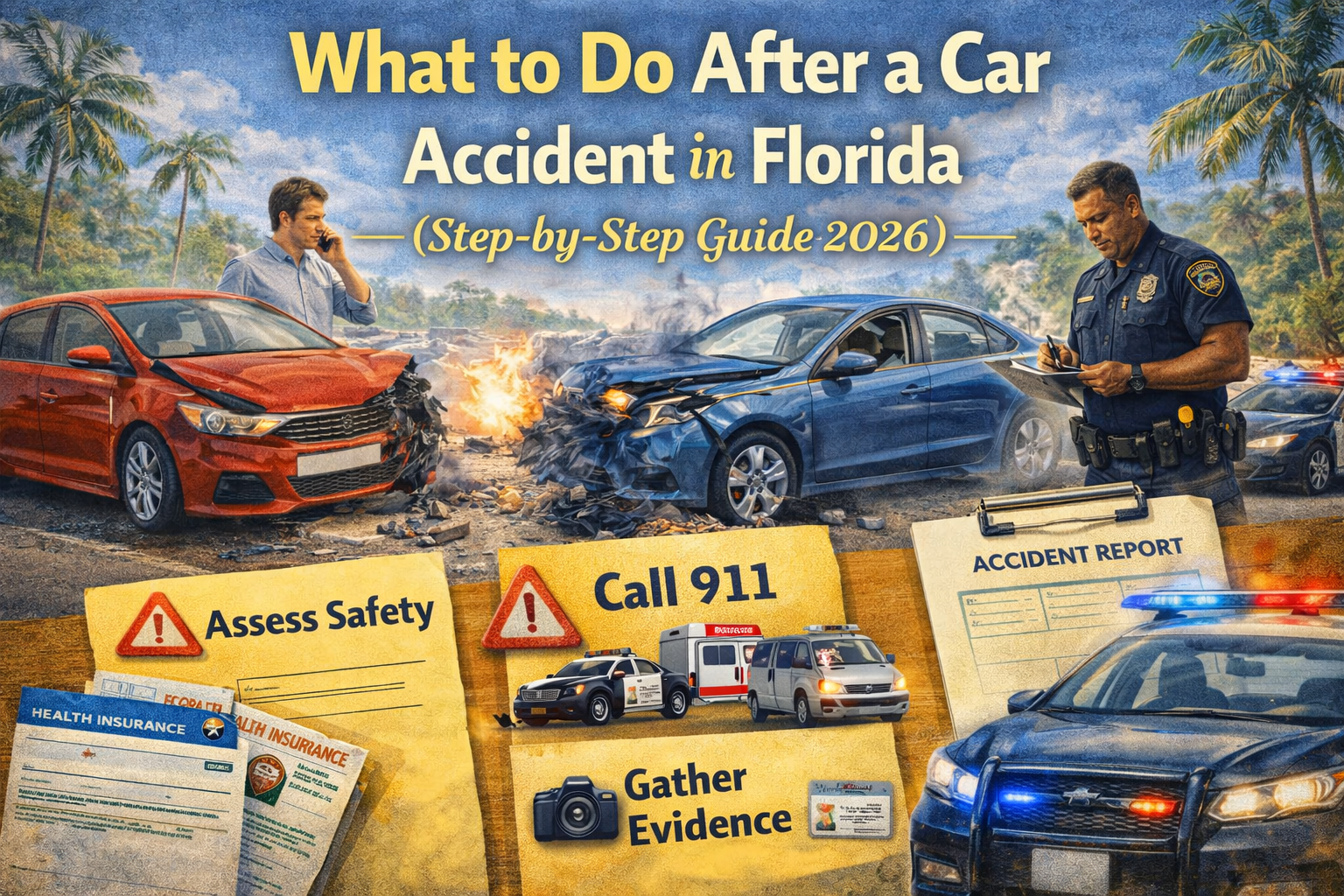
What to Do After a Car Accident in Florida (Step-by-Step Guide 2026)
Introduction
A car accident in Florida can be overwhelming, especially if you don’t know what steps to take next. In those first few minutes, your decisions can impact your safety, your insurance claim, and even your financial future.
Florida has unique laws, including a no-fault insurance system, which makes handling an accident different compared to other states. Knowing exactly what to do can help you avoid mistakes, speed up your claim, and protect your rights.
In this step-by-step guide, you’ll learn what to do immediately after an accident, how to deal with insurance, and how to avoid costly errors.
Step 1: Check for Injuries and Stay Safe
Your safety comes first.
- Check yourself and passengers for injuries
- Call 911 if anyone is hurt
- Move to a safe area if possible
- Turn on hazard lights
🚨 Never leave the scene of an accident—it’s illegal in Florida.
Step 2: Call the Police
In Florida, you should report most accidents.
Call the police if:
- There are injuries
- There is significant vehicle damage
- A driver is uninsured
- There is a dispute about what happened
💡 A police report can be crucial for your insurance claim.
Step 3: Exchange Information
Collect all necessary details from the other driver:
- Name and contact information
- Driver’s license number
- Insurance company and policy number
- Vehicle details (make, model, plate)
👉 Avoid discussing fault at the scene.
Step 4: Document the Scene
Proper documentation can make or break your claim.
Take photos of:
- Vehicle damage
- License plates
- Road conditions
- Traffic signs
- Injuries (if visible)
💡 Also collect witness contact information if possible.
Step 5: Seek Medical Attention
Even if you feel fine, get checked by a doctor.
- Some injuries appear later
- Florida PIP requires treatment within 14 days
- Medical records support your claim
👉 Delaying care can reduce your compensation.
Step 6: Notify Your Insurance Company
Report the accident as soon as possible.
- Provide accurate details
- Submit photos and documentation
- Get a claim number
- Follow your insurer’s instructions
💡 Quick reporting helps speed up the process.
Step 7: Understand Florida’s No-Fault Law
Florida uses a no-fault system, meaning:
- Your insurance covers your injuries first
- PIP pays for medical expenses and lost wages
- You may step outside the system for serious injuries
👉 This is why having the right coverage is critical.
Common Mistakes to Avoid After an Accident
Avoid these costly errors:
- Admitting fault at the scene
- Not calling the police
- Failing to document damages
- Delaying medical care
- Not reporting the accident promptly
When Should You Contact a Professional?
You may need expert help if:
- The accident involves serious injuries
- Liability is unclear
- Your claim is denied
- You’re offered a low settlement
👉 Working with an insurance expert can make a big difference.
Frequently Asked Questions (FAQ)
1. Do I have to report every accident in Florida?
Not all, but accidents involving injuries or significant damage should be reported.
2. How long do I have to file a claim?
You should report it immediately, but deadlines depend on your policy.
3. What if the other driver has no insurance?
Your coverage (like PIP or uninsured motorist) may help cover damages.
4. Should I admit fault after an accident?
No, let the insurance companies determine fault based on evidence.
Related Articles
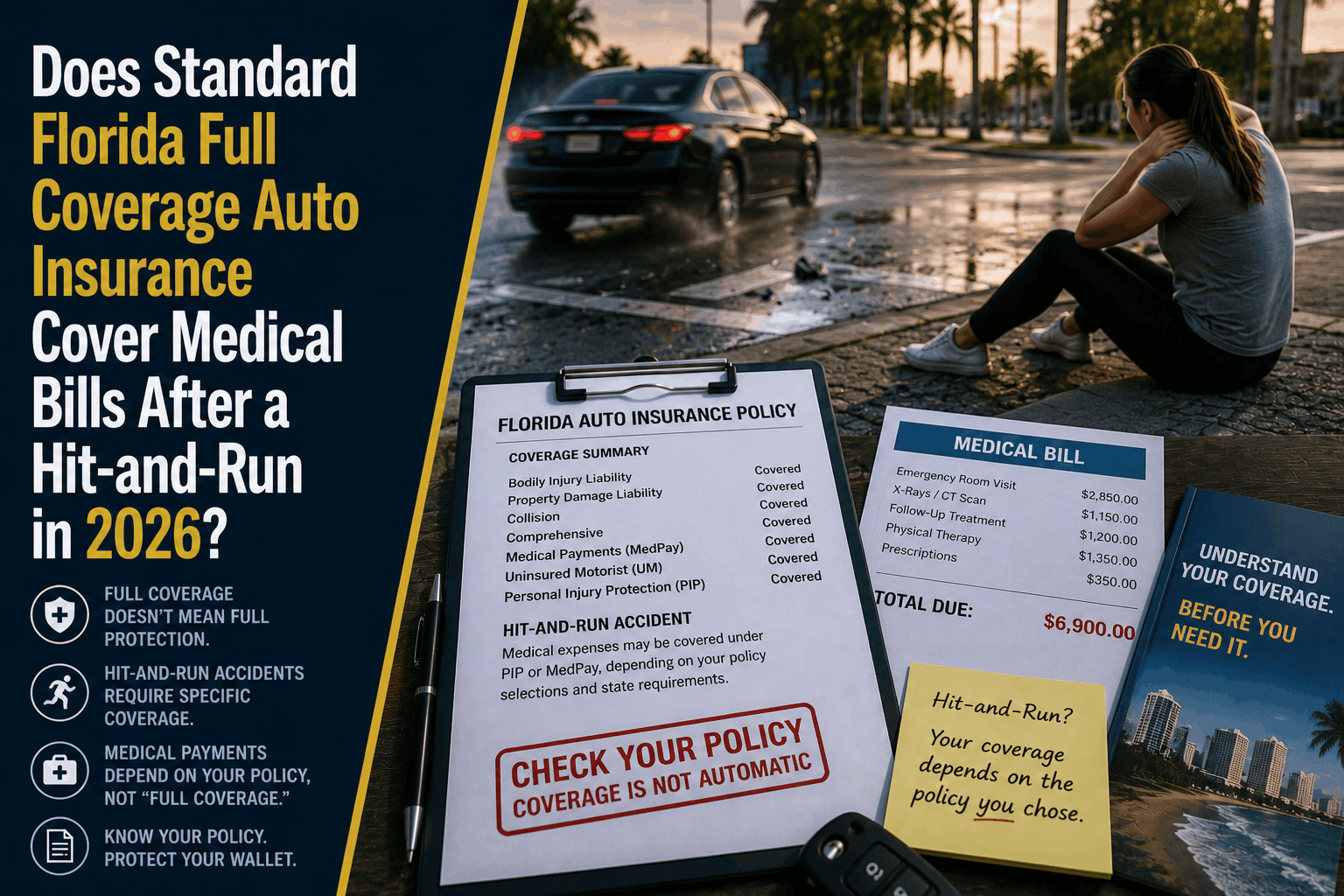
Does Florida Full Coverage Pay Medical Bills in a Hit-and-Run?
Relying on Florida "full coverage" auto insurance to pay your medical bills after a hit-and-run in 2026? Discover why it fails and leaves you broke.
Read More →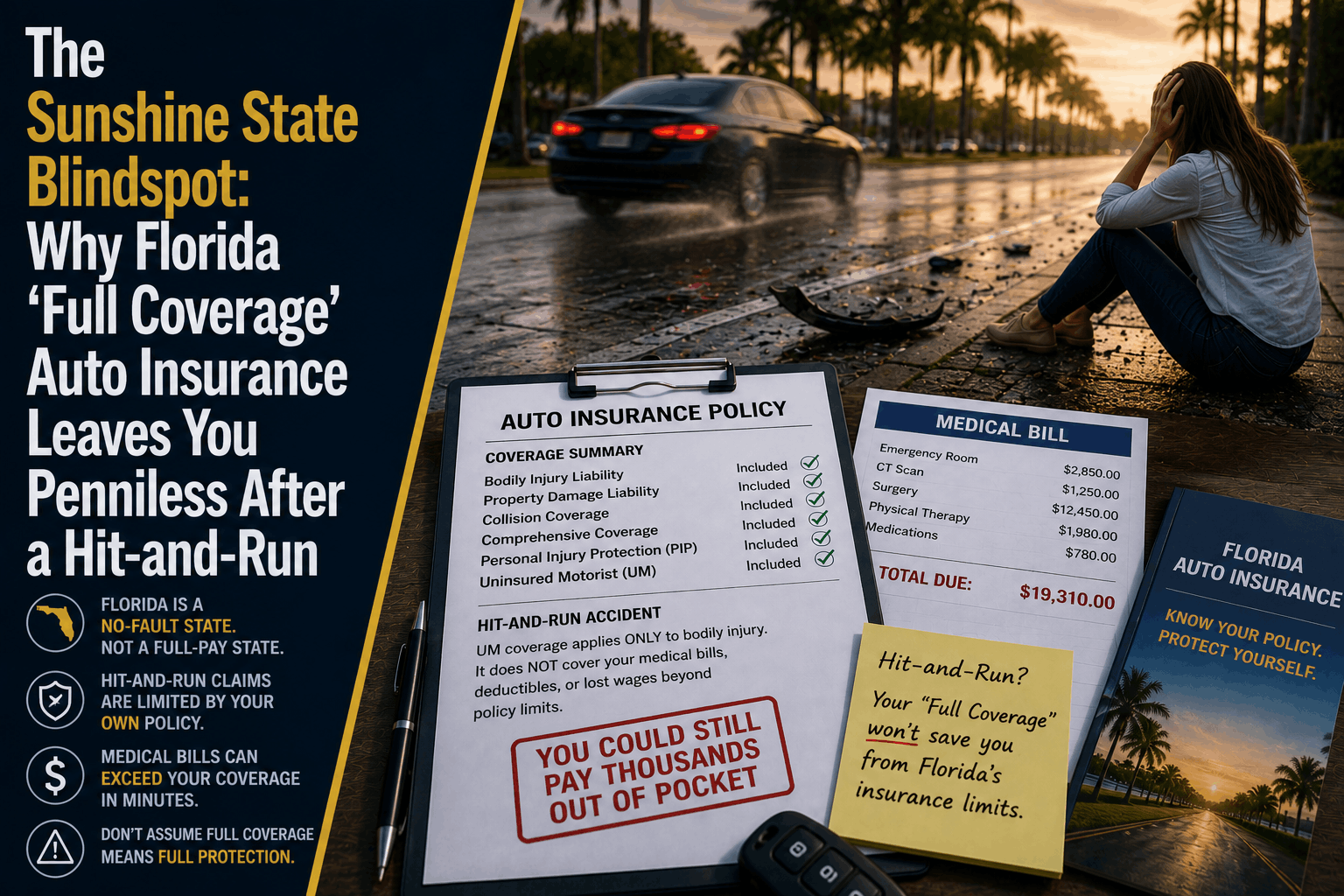
Why Florida Full Coverage Auto Insurance Fails in Hit-and-Runs
Think you're safe with Florida "full coverage" auto insurance? Discover the hidden blind spot that leaves hit-and-run victims broke and unprotected in 2026.
Read More →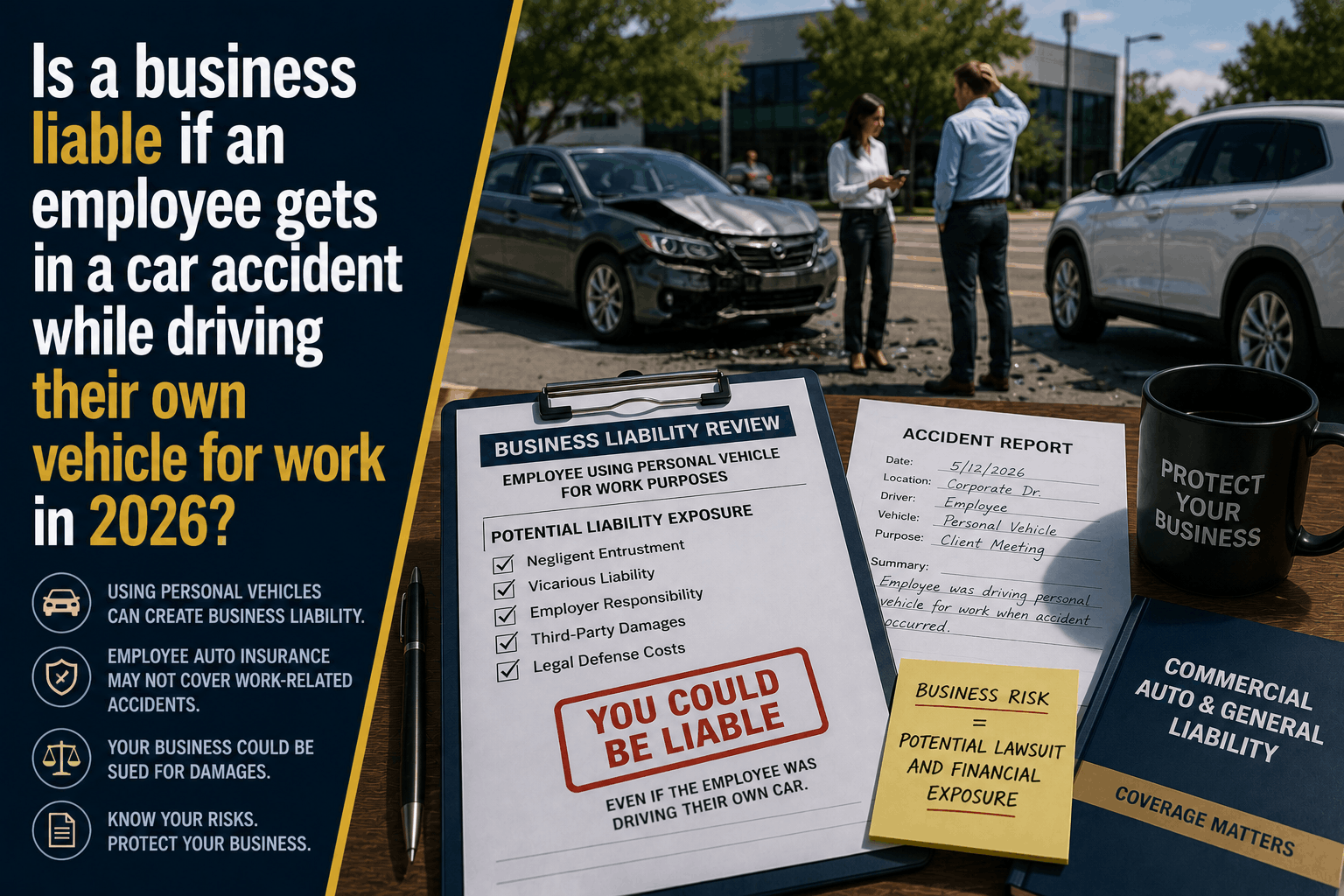
Is a Business Liable If an Employee Crashes a Personal Car for Work?
Discover your corporate liability if an employee causes a car accident while driving their own vehicle for work in 2026\. Learn about the HNOA loophole.
Read More →