What Does Car Insurance Cover in Florida? (Full Breakdown 2026)
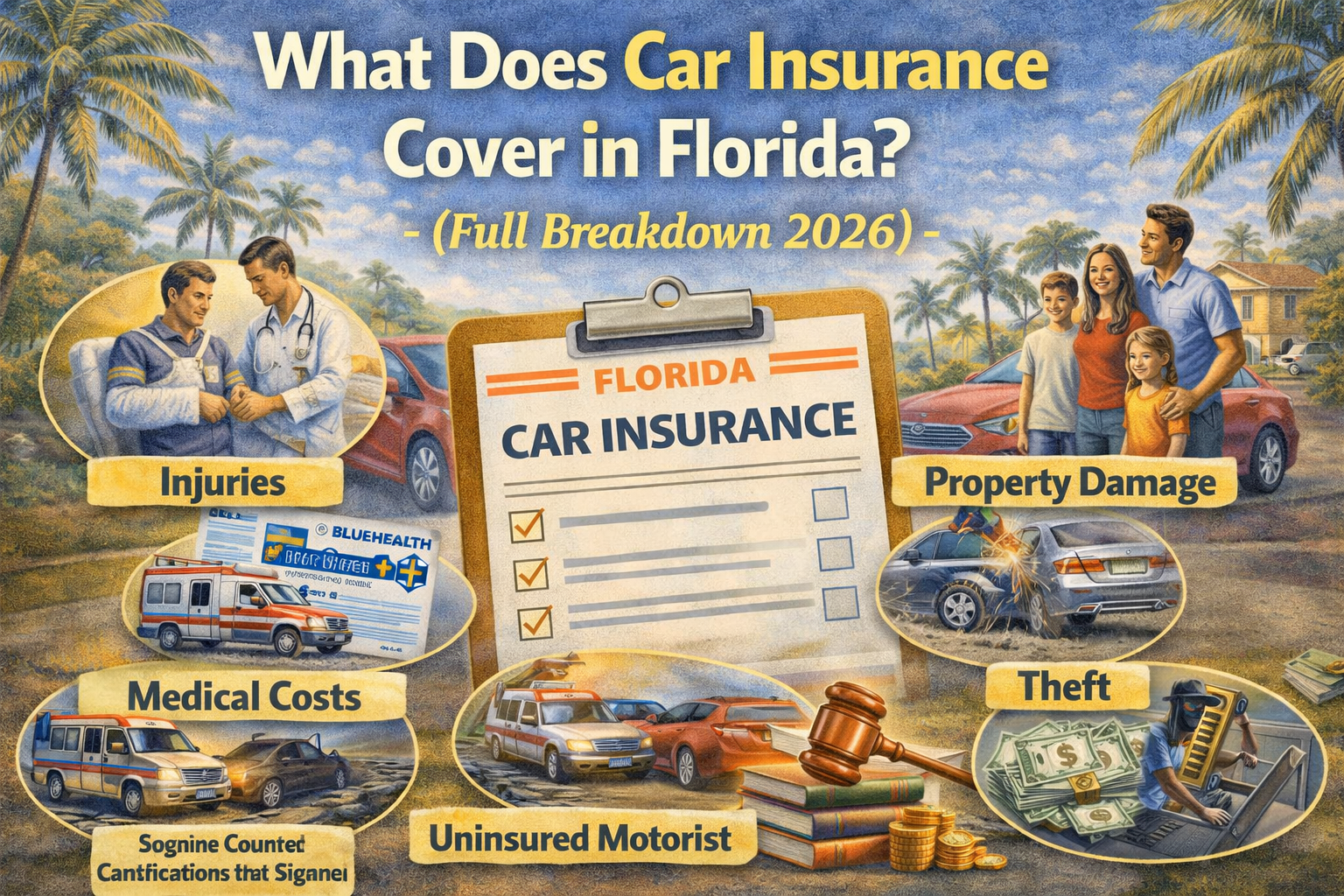
What Does Car Insurance Cover in Florida? (Full Breakdown 2026)
Introduction
Car insurance in Florida can be confusing, especially with terms like liability, collision, comprehensive, and PIP. Many drivers pay for coverage without fully understanding what they’re actually protected against—or worse, what they’re not covered for.
Because Florida has unique laws and risks, including a no-fault system and high accident rates, it’s essential to understand how each part of your policy works.
In this guide, we’ll break down every major type of car insurance coverage in Florida so you can make smarter decisions, avoid gaps in protection, and ensure you’re fully covered when it matters most.
Understanding the Basics of Car Insurance in Florida
Florida requires drivers to carry minimum insurance, but that coverage is often limited.
Minimum required coverage:
- Personal Injury Protection (PIP): $10,000
- Property Damage Liability (PDL): $10,000
👉 This is the legal minimum—but it does NOT cover everything.
What Is Liability Insurance?
Liability insurance covers damage you cause to others.
In Florida, this includes:
- Property Damage Liability (PDL): covers damage to another person’s vehicle or property
💡 Important: Florida does NOT require bodily injury liability in most cases—but that doesn’t mean you shouldn’t have it.
Why it matters:
If you cause an accident, liability coverage protects you from paying out of pocket for damages.
What Is PIP (Personal Injury Protection)?
PIP is required in Florida and covers your own injuries.
It includes:
- 80% of medical expenses
- 60% of lost wages
- Certain additional expenses
👉 It applies regardless of who caused the accident.
What Is Collision Coverage?
Collision coverage pays for damage to your vehicle after an accident.
It covers:
- Crashes with another vehicle
- Collisions with objects (trees, poles, etc.)
- Single-car accidents
💡 This coverage is optional but highly recommended.
What Is Comprehensive Coverage?
Comprehensive insurance covers damage NOT caused by a collision.
It includes:
- Theft
- Vandalism
- Fire
- Flooding
- Hurricanes
- Falling objects
👉 In Florida, this is especially important due to weather risks.
Liability vs Collision vs Comprehensive
Here’s a simple breakdown:
- Liability: Covers damage to others
- Collision: Covers your car in accidents
- Comprehensive: Covers non-accident damage
💡 Together, these form what’s often called “full coverage”.
What Is Full Coverage Insurance?
“Full coverage” is not a specific policy, but a combination of:
- Liability insurance
- Collision coverage
- Comprehensive coverage
👉 It provides broader protection than minimum coverage.
What Car Insurance Does NOT Cover
Even full coverage has limits.
Typically NOT covered:
- Mechanical breakdowns
- Wear and tear
- Driving without a valid license
- Intentional damage
- Using your car for certain business activities (without proper coverage)
How to Choose the Right Coverage in Florida
Choosing the right policy depends on your situation.
Consider:
- Value of your vehicle
- Your budget
- Risk tolerance
- Driving habits
- Location (high-risk areas vs low-risk)
💡 The goal is to balance affordability with protection.
Why Working with an Insurance Agency Matters
Understanding coverage is one thing—choosing the right policy is another.
A local insurance agency can:
- Compare multiple companies
- Customize your coverage
- Help you avoid gaps
- Save you money long-term
👉 This is especially important in a complex state like Florida.
Frequently Asked Questions (FAQ)
1. Is full coverage required in Florida?
No, only PIP and property damage liability are required.
2. What is the difference between collision and comprehensive?
Collision covers accidents, while comprehensive covers non-collision events like theft or weather damage.
3. Is liability insurance enough?
It meets legal requirements but may not fully protect you financially.
4. What is the best coverage in Florida?
It depends on your needs, but many drivers benefit from full coverage.
Related Articles
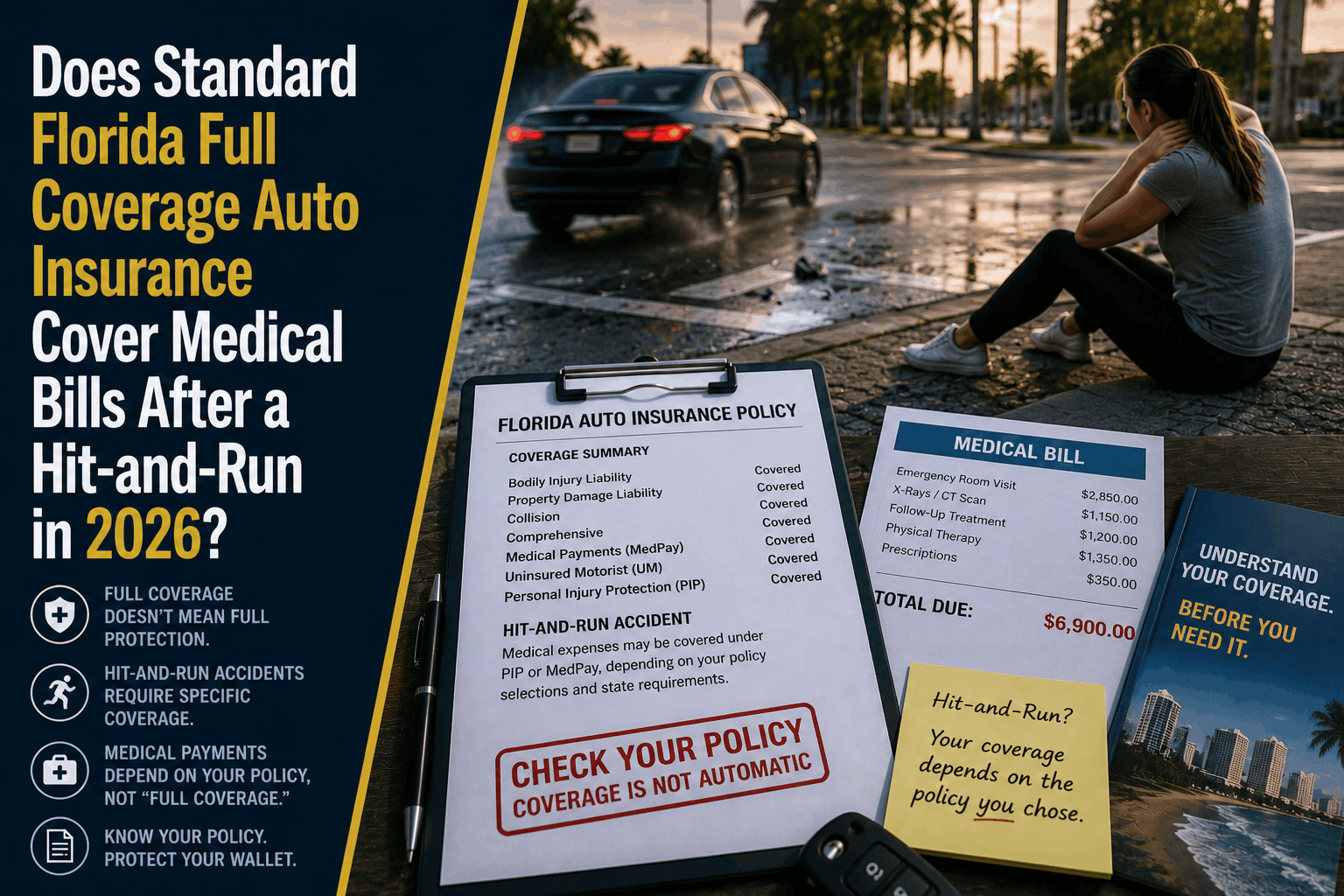
Does Florida Full Coverage Pay Medical Bills in a Hit-and-Run?
Relying on Florida "full coverage" auto insurance to pay your medical bills after a hit-and-run in 2026? Discover why it fails and leaves you broke.
Read More →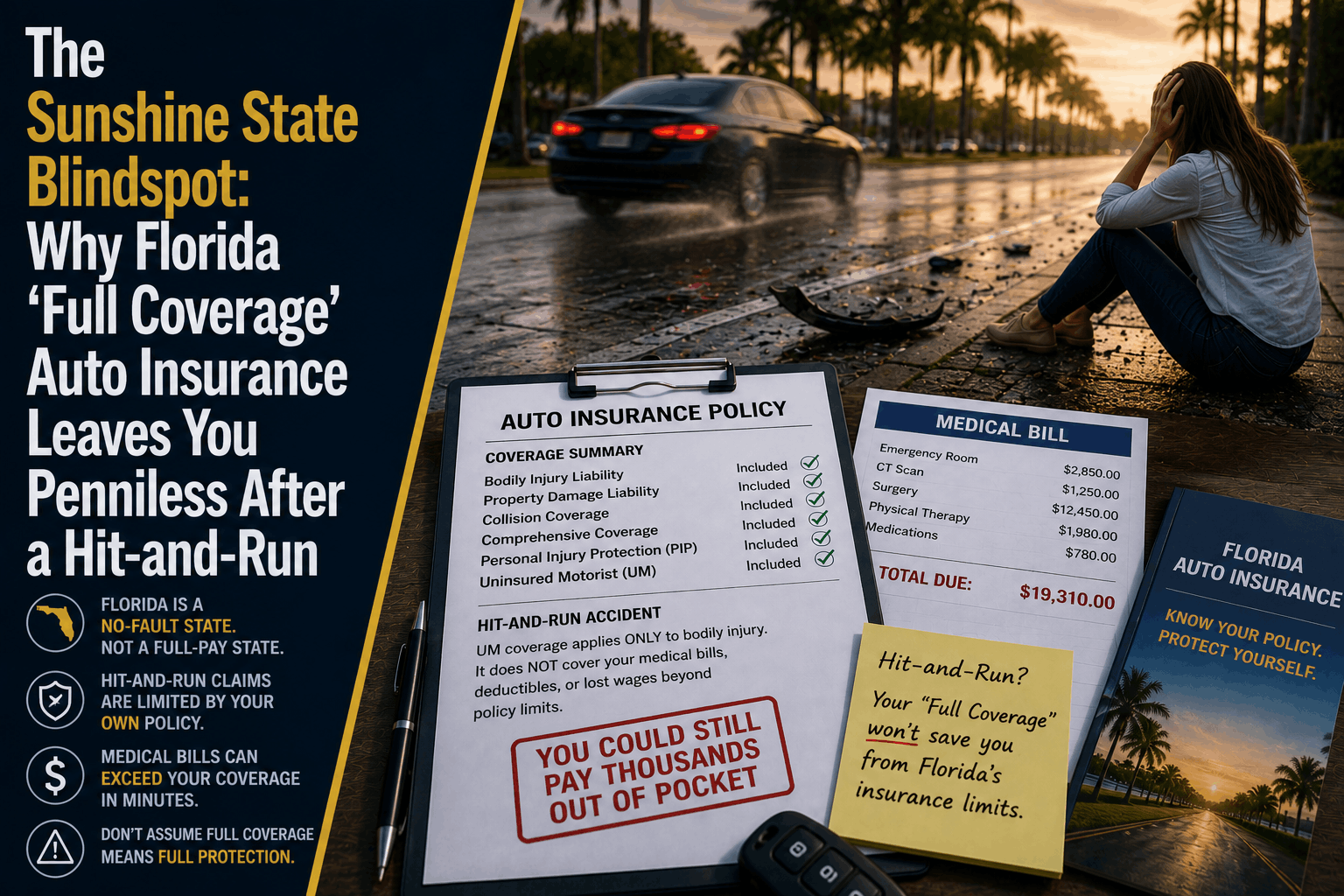
Why Florida Full Coverage Auto Insurance Fails in Hit-and-Runs
Think you're safe with Florida "full coverage" auto insurance? Discover the hidden blind spot that leaves hit-and-run victims broke and unprotected in 2026.
Read More →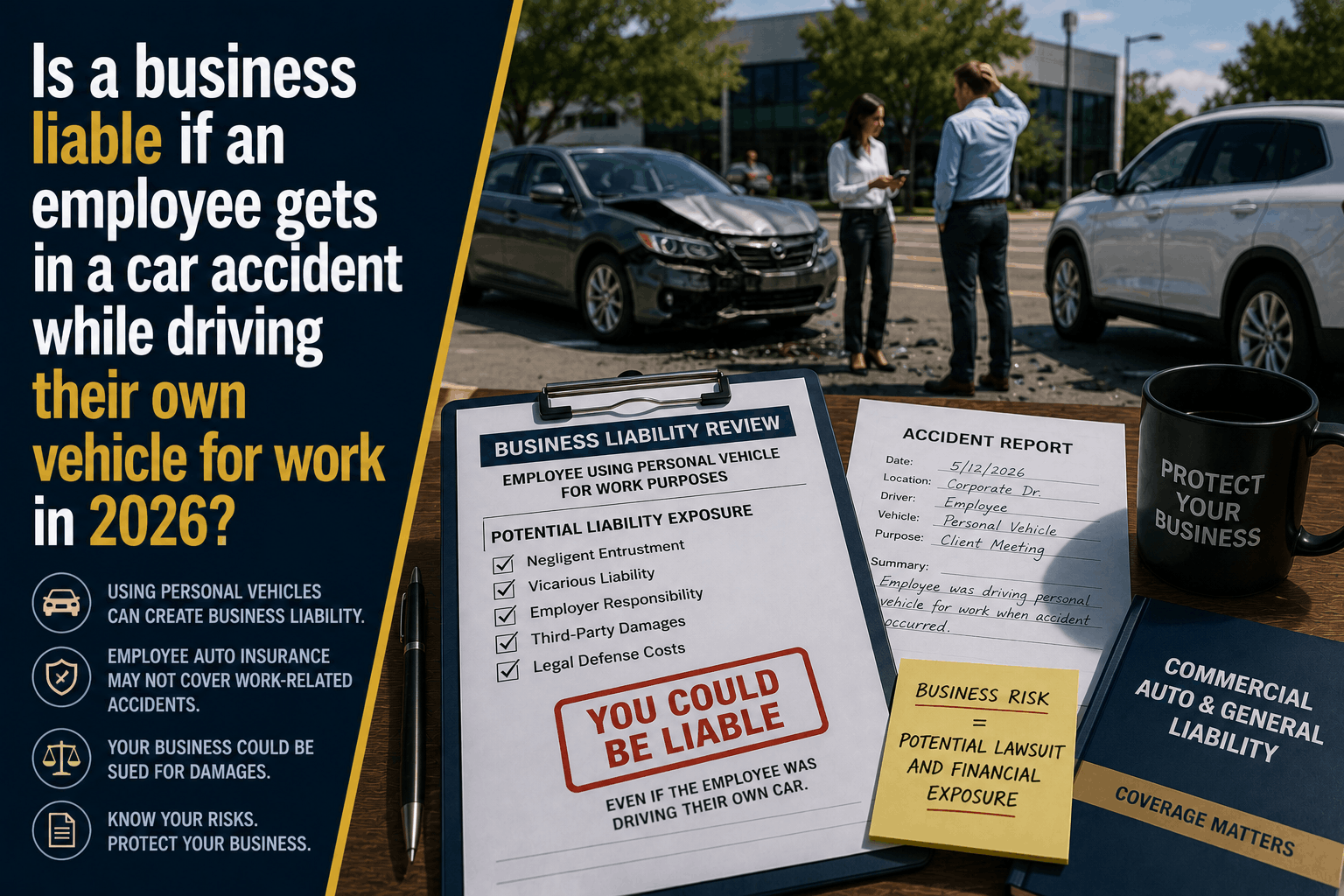
Is a Business Liable If an Employee Crashes a Personal Car for Work?
Discover your corporate liability if an employee causes a car accident while driving their own vehicle for work in 2026\. Learn about the HNOA loophole.
Read More →