How to File an Insurance Claim in Florida (2026 Guide) – Quick & Easy
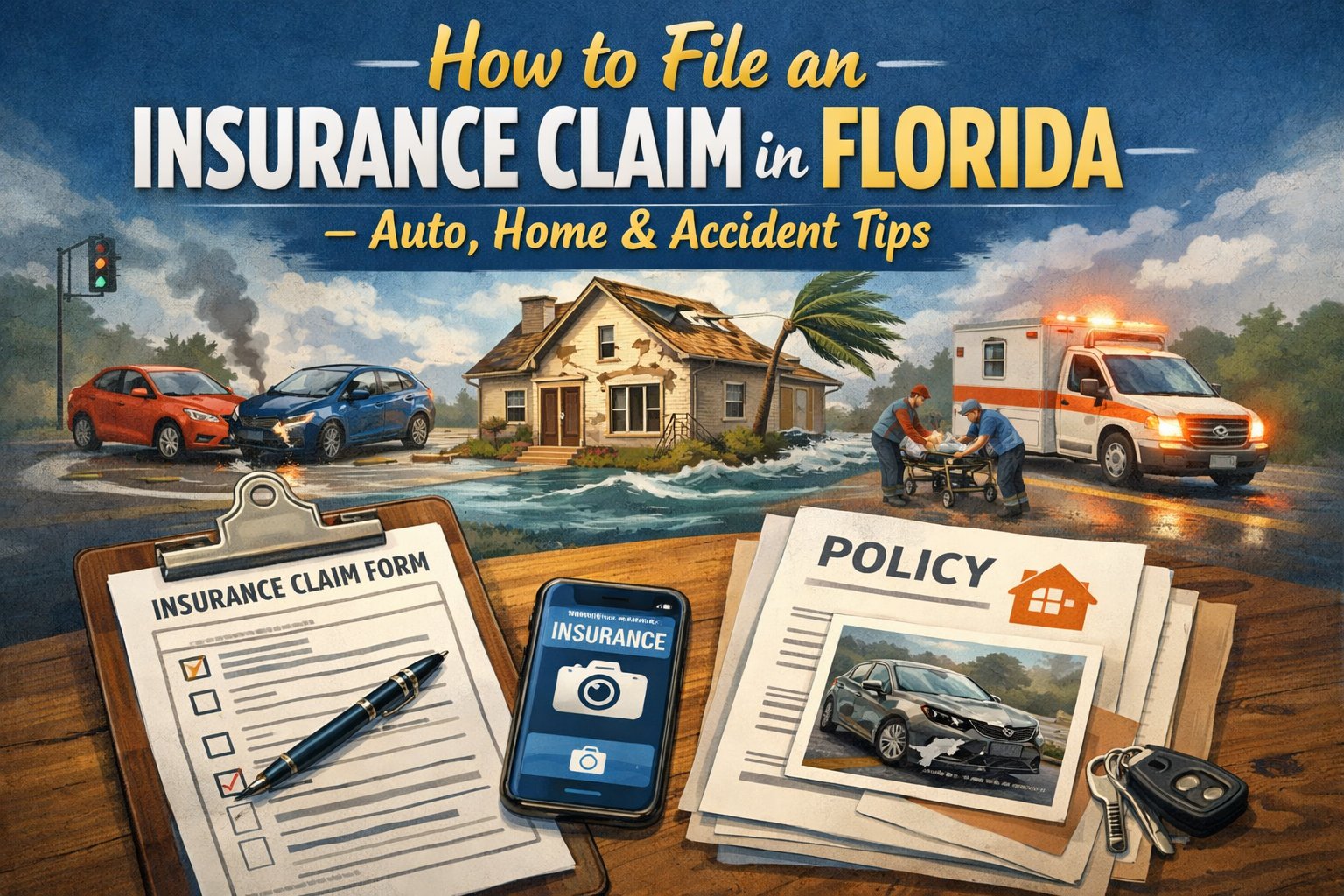
How to File an Insurance Claim in Florida – Auto, Home & Accident Tips
Introduction
Filing an insurance claim in Florida can seem complicated, but knowing the right steps can save you time, stress, and money. Whether it’s for auto, home, or personal accidents, understanding how to document, report, and follow up is crucial.
Florida presents unique challenges, such as hurricanes, floods, high accident rates, and many uninsured drivers. This guide will walk you through step-by-step instructions, common mistakes to avoid, and tips to ensure your claim is handled quickly and efficiently.
Step 1: Know Your Policy
Before filing any claim, review your insurance policy carefully:
- Coverage limits for auto, home, or personal injury
- Deductibles you must pay
- Specific conditions for different types of claims
- Contact information for claims department
💡 Tip: Understanding your coverage helps avoid surprises during the claims process.
Step 2: Document Everything
Accurate documentation speeds up claim approval:
- Take clear photos or videos of damages
- Collect receipts for repairs or medical expenses
- Write a detailed description of what happened
- Gather witness statements if applicable
Step 3: Notify Your Insurance Company
Contact your insurance provider as soon as possible:
- Use the company’s app, website, or hotline
- Provide all required documentation
- Ask for a claims reference number
- Note the adjuster’s contact information
⏱ Pro Tip: Early notification can prevent delays and protect your rights.
Step 4: Work with an Adjuster
The insurance adjuster evaluates the damage and determines coverage:
- Schedule an inspection promptly
- Be honest and precise with details
- Ask questions if you don’t understand the process
- Keep records of all conversations and emails
Step 5: Approve or Dispute Settlement
Once the adjuster submits their report:
- Review the settlement offer carefully
- Compare it to repair or replacement estimates
- Dispute any discrepancies with evidence
- Know your appeal rights if necessary
Tips for Filing Auto Insurance Claims in Florida
- Report accidents within 24–48 hours
- Provide police reports if available
- Use your insurance company’s recommended repair shops for faster processing
- Keep rental car receipts if applicable
Tips for Filing Homeowners Insurance Claims in Florida
- Document hurricane or storm damage immediately
- Protect your property from further damage (tarps, temporary repairs)
- Submit claims with photos and receipts for faster approval
- Track all communications with your insurer
Tips for Personal Injury or Accident Claims
- Seek medical attention immediately
- Keep detailed medical records and bills
- Document the incident clearly with photos or witness statements
- Communicate consistently with your claims adjuster
Common Mistakes to Avoid
- Waiting too long to report damages
- Failing to document or photograph properly
- Giving incomplete or inaccurate information
- Ignoring deadlines or paperwork requirements
FAQ
1. How long does it take to process an insurance claim in Florida?
Most claims are processed within 2–4 weeks, but complex claims like hurricanes may take longer.
2. Can I hire a public adjuster?
Yes, a public adjuster can help maximize your settlement, especially for large or complex claims.
3. Do I need to report minor damages?
Yes, even minor damages should be reported to avoid denial of future claims.
4. What if my claim is denied?
You can appeal the decision, provide additional evidence, or seek legal assistance if necessary.
Related Articles
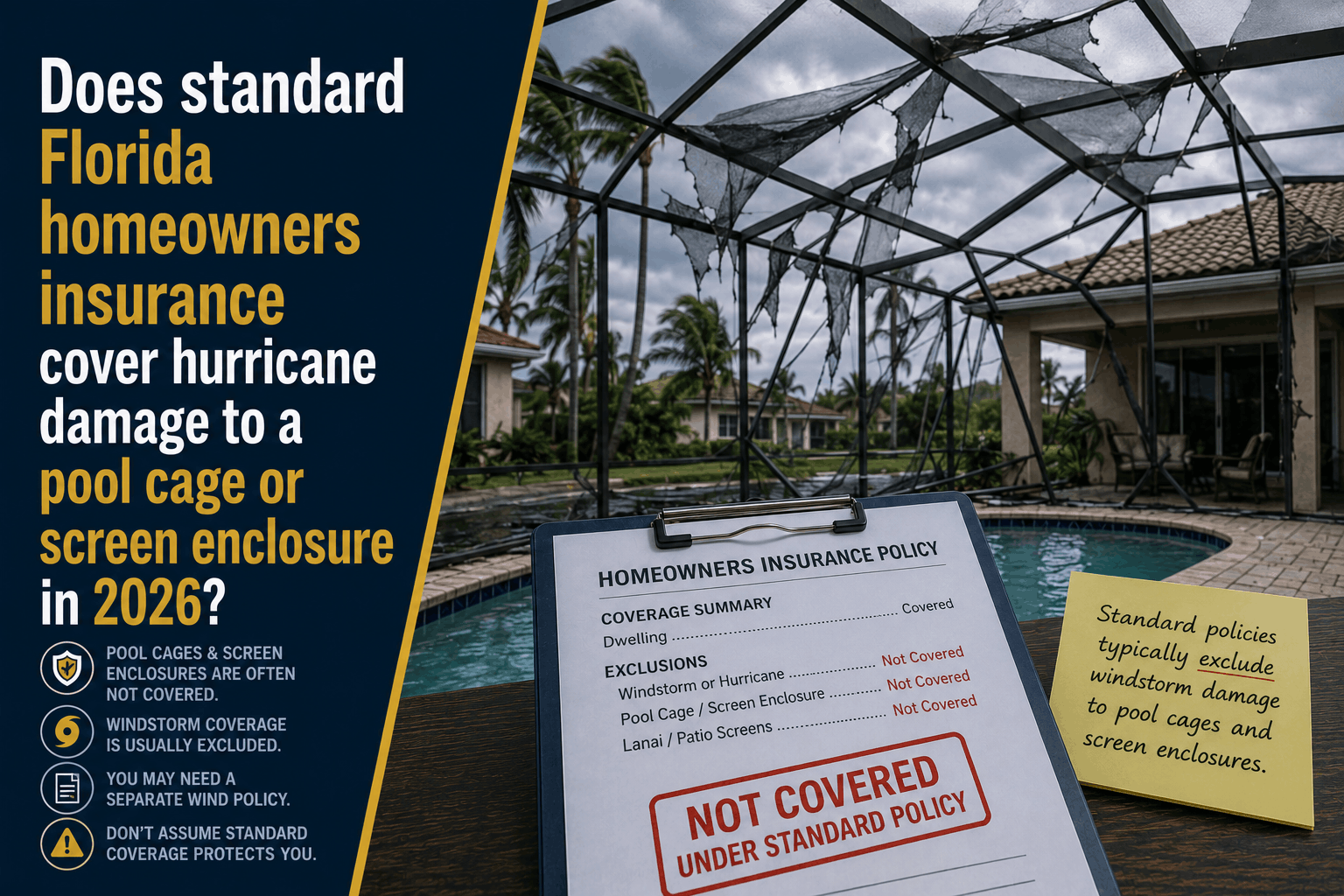
Does Florida Homeowners Insurance Cover a Pool Cage in 2026?
Learn about the "Lanai Loophole" in Florida. Discover why standard homeowners insurance excludes or limits hurricane damage to pool cages and screen enclosures.
Read More →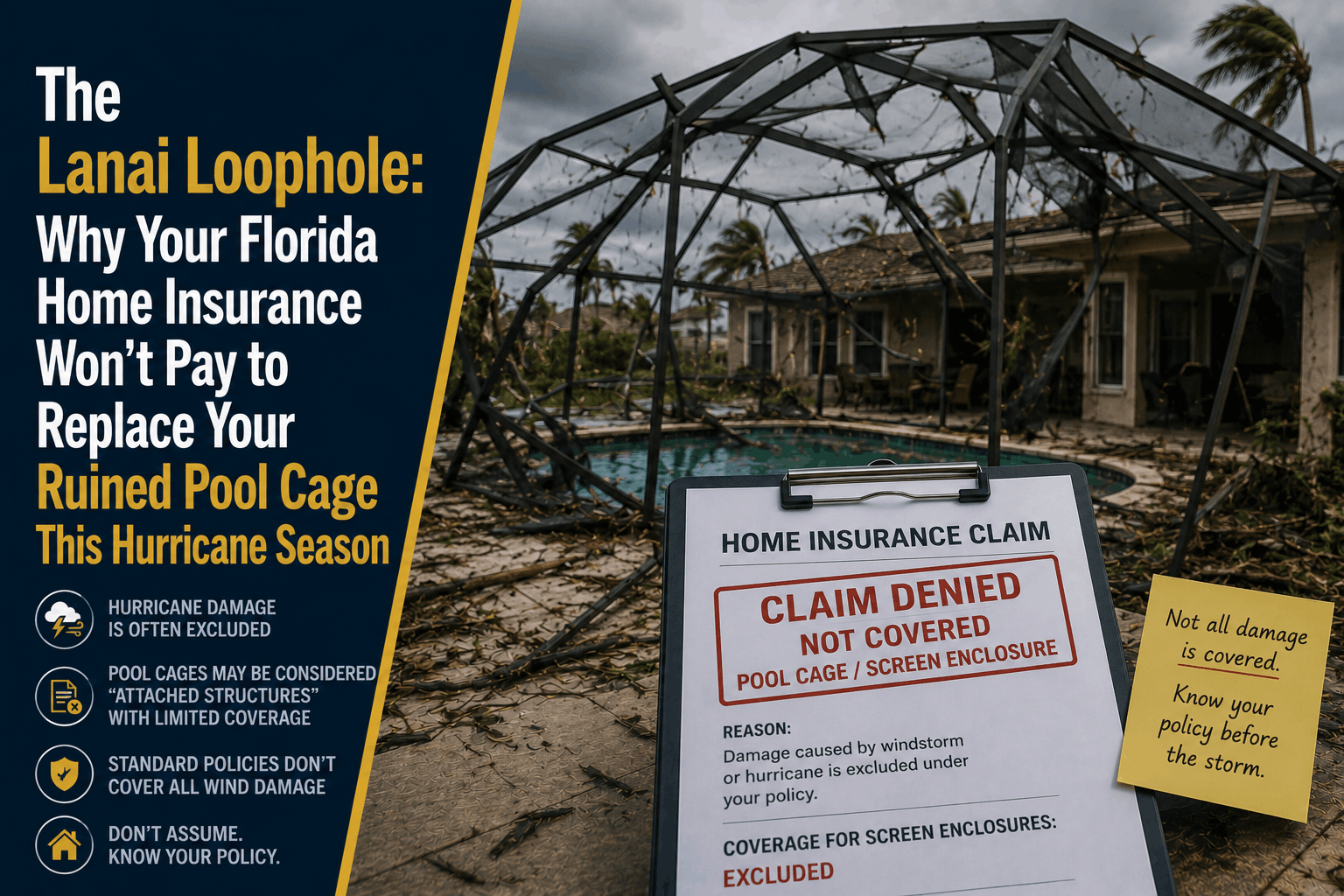
The Lanai Loophole: Why Home Insurance Won't Fix Your Pool Cage
Discover how Florida’s strict "Lanai Loophole" can completely exclude or limit your pool cage and screen enclosure coverage this hurricane season.
Read More →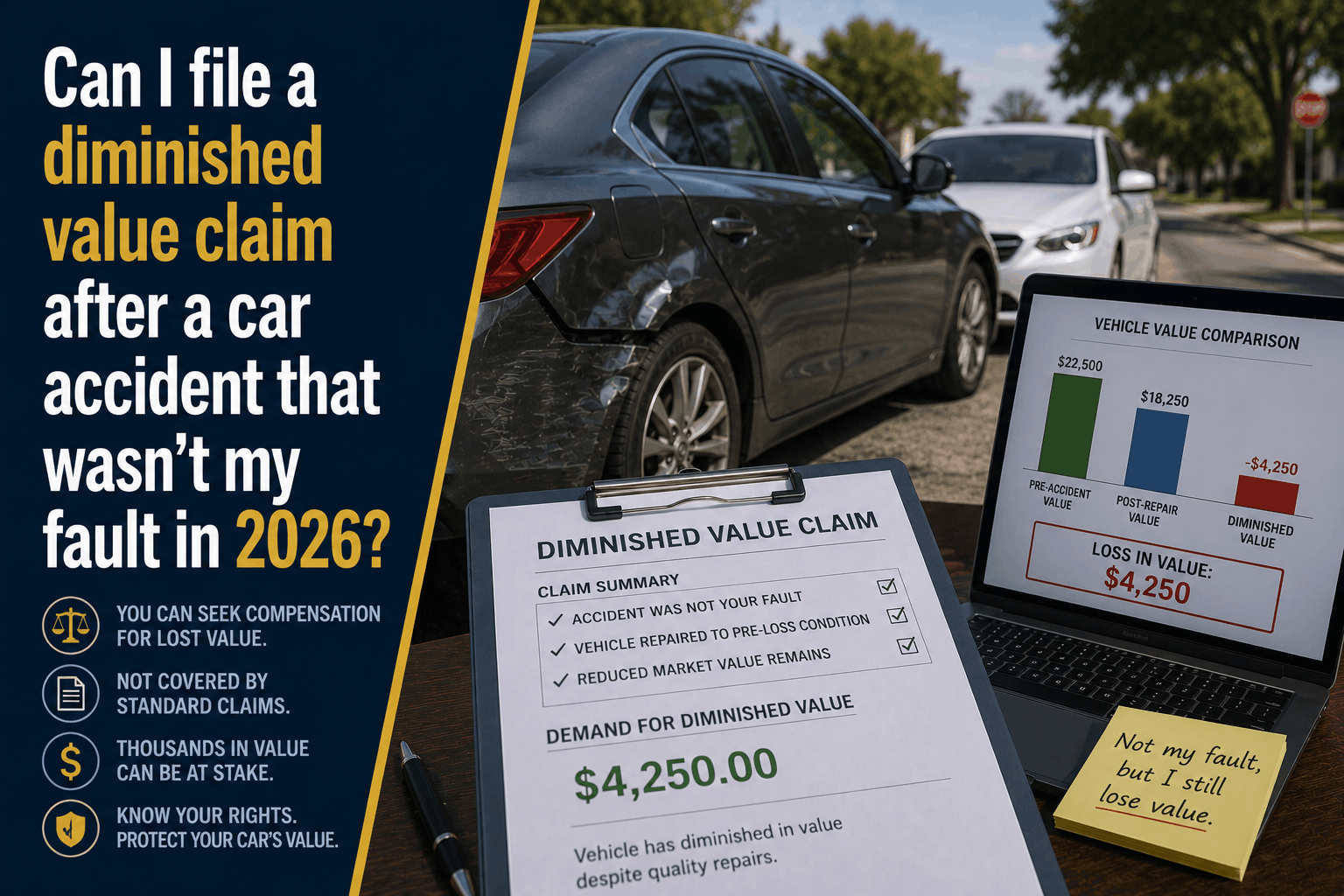
Can I File a Diminished Value Claim in 2026? (Not At-Fault Guide)
If you were involved in a car accident that wasn't your fault, discover how to file a Diminished Value claim to recover your vehicle's lost resale value.
Read More →