Does Home Insurance Cover Stolen Jewelry & Collectibles? (2026)
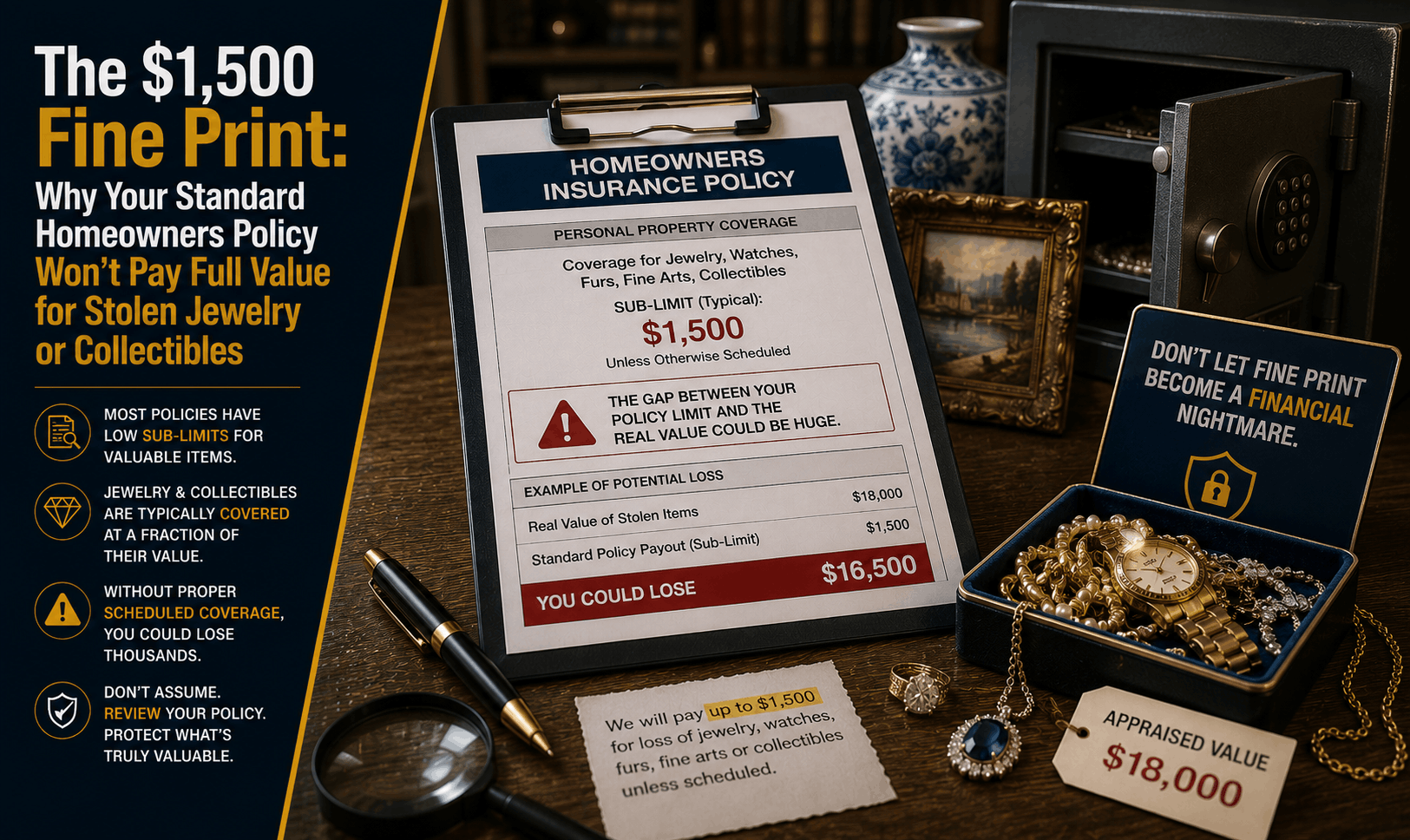
The $1,500 Fine Print: Why Your Standard Homeowners Policy Won't Pay Full Value for Stolen Jewelry or Collectibles
The Direct Answer
The short answer is absolutely not—your standard homeowners insurance policy will not pay full replacement value if your fine jewelry, luxury watches, or high-value collectibles are stolen. A common and financially devastating surprise for homeowners following a burglary is discovering the sub-limit clause built into standard HO-3 policies. While your policy may advertise $300,000 or more in total personal property coverage, standard policy contracts place a strict $1,500 aggregate sub-limit on theft of high-risk items like jewelry, watches, precious stones, and rare collectibles. If a burglar breaks into your home and steals $15,000 worth of engagement rings, heirloom watches, or valuable art, your insurance company will write a check for only $1,500 (minus your deductible), leaving you to absorb the remaining $13,500 loss entirely out of pocket.
Relying on a standard home insurance policy to protect high-value personal possessions is a massive financial risk. Understanding where basic property limits end and specialized coverage begins is essential to safeguarding your family's most cherished assets.
1. The Sub-Limit Trap: Blanket Coverage vs. Peril-Specific Limits
To understand why standard home insurance leaves high-value items vulnerable, it is necessary to examine how insurance carriers structure personal property protection. Personal property is typically insured as a broad category, but specific categories carry internal caps:
- Broad Personal Property Protection: Standard policies generally insure your personal belongings—like furniture, clothing, and electronics—up to 50% or 70% of your dwelling coverage limit. For general contents, this protection covers theft up to the full policy limit.
- Special Sub-Limits for High-Risk Categories: Because items like fine jewelry, luxury watches, silver, firearms, and rare collectibles are small, portable, and easy for burglars to liquidate, insurance carriers place strict sub-limits on them specifically for the peril of theft. These sub-limits typically range from $1,000 to $2,500 in total per loss, regardless of how many individual items were stolen.
The gap between standard personal property limits and category sub-limits creates a severe financial loss during a burglary:
A homeowner may carry $200,000 in total personal property coverage on their dwelling. However, if thieves steal a $10,000 engagement ring and a $5,000 luxury watch, the policy's special theft sub-limit restricts the maximum payout to just $1,500 total. After applying a standard $1,000 property deductible, the actual payout from the carrier shrinks to a mere $500, resulting in a net out-of-pocket loss of $14,500 for the homeowner.
2. Unscheduled vs. Scheduled Assets: The Valuation Catch
Another significant hurdle in filing a claim for stolen valuables under a standard policy is proving ownership and exact cash value after the event occurs.
- Actual Cash Value (ACV) Depreciations: Standard un-endorsed policies often settle claims on an Actual Cash Value basis rather than Replacement Cost. This means the insurer deducts depreciation for age, wear, and market fluctuations from the payout.
- The Proof of Ownership Burden: If family heirlooms or vintage collectibles are stolen without prior documentation, insurance adjusters require detailed proof of purchase, appraisals, or photos to validate the claim. Without pre-scheduled proof, claiming the maximum sub-limit can become a lengthy and frustrating administrative struggle.
3. How to Fully Protect Your High-Value Belongings
You do not have to leave your fine jewelry, luxury watches, or rare collections exposed to standard policy limits. Eliminating the $1,500 sub-limit trap requires implementing a dedicated personal property strategy:
- Step 1: Add a Personal Articles Scheduled Endorsement. The most direct solution is to "schedule" or float your valuable items by adding a Personal Articles Endorsement (also known as a rider) to your primary homeowners policy. Scheduling an item increases its coverage to its full appraised value, removes the standard sub-limit, and completely eliminates the policy deductible for that specific item.
- Step 2: Obtain Professional Independent Appraisals. For items valued over $1,000, secure a certified, itemized appraisal from a recognized jeweler or collectibles expert. Keep digital copies of these appraisals, along with high-resolution photos and serial numbers, in a secure cloud database. Most insurers require an updated appraisal every three to five years.
- Step 3: Secure Specialized Standalone Valuables Insurance. For extensive collections, high-value artwork, or significant jewelry portfolios, consider a standalone valuable items policy. Standalone policies often offer broader protections than standard riders, including worldwide coverage against loss, mysterious disappearance, and accidental damage (such as a stone falling out of its setting).
Why Working with an Independent Agency is Vital
Structuring protection for luxury goods and high-value personal assets requires specialized portfolio management. At Walker Insurance Agency, we help homeowners identify hidden sub-limits and audit their property schedules before a loss occurs.
The Walker Advantage:
- Sub-Limit Audits: We conduct thorough reviews of your current home insurance policy to uncover category caps on jewelry, art, silver, and collectibles, ensuring no valuable assets are left un-endorsed.
- Tailored Endorsements: We shop leading independent insurance carriers to bind comprehensive scheduled riders and standalone valuables policies that fit your specific inventory and budget.
- Valuation & Appraisal Guidance: We coordinate with certified appraisers and adjusters to ensure your documentation meets strict carrier requirements, guaranteeing smooth, full-value payouts in the event of a claim.
FAQ
1. Are my valuable items covered if I lose a ring or watch outside of my home?
Under a standard, un-endorsed homeowners policy, "mysterious disappearance" or accidental loss outside the home is generally not covered. However, if you add a scheduled Personal Articles Endorsement or standalone valuables policy, your items are covered worldwide against loss, theft, and accidental damage.
2. Does scheduling jewelry or collectibles increase my home insurance deductible?
No. In fact, scheduling an item under a Personal Articles Endorsement typically removes the deductible entirely for claims involving that specific item. If a scheduled $8,000 ring is stolen, you receive the full $8,000 payout without paying a deductible.
3. What items are usually subject to special theft sub-limits under standard home insurance?
Standard HO-3 policies typically place special theft sub-limits on several specific categories, including fine jewelry and watches, firearms, silverware and goldware, rare coins and currency, stamps, fine art, and high-value sports memorabilia or trading cards.
Secure Your Legacy and Protect Your Fine Valuables Today
Your jewelry, watches, and rare collections represent significant financial investments and irreplaceable personal memories. Allowing a hidden $1,500 fine-print sub-limit to dictate your recovery after a burglary can lead to severe financial distress.
Take control of your personal property protection today. Contact Walker Insurance Agency for a comprehensive valuable items and home insurance evaluation. We provide the expertise and tailored coverage needed to eliminate policy sub-limits, insure your treasures for their true market value, and keep your financial assets completely secure.
[GET A FREE QUOTE TODAY]
Call our personal lines division at +1-407-977-7100 or visit our office in Stuart, FL. Let us safeguard your property boundaries today.
Related Articles
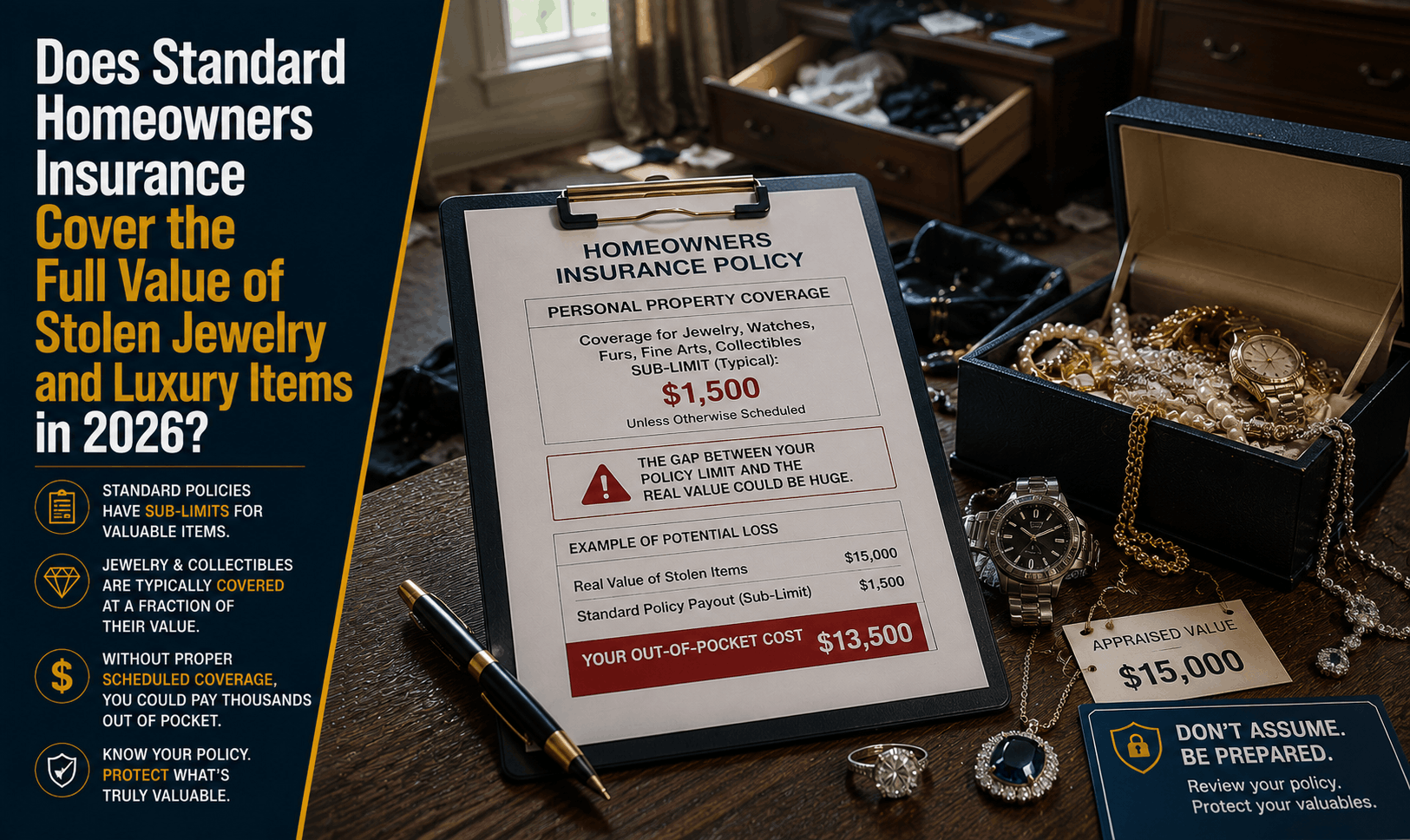
Does Homeowners Insurance Cover Stolen Jewelry & Luxury Goods? (2026)
Had luxury watches or jewelry stolen? Learn why standard homeowners insurance caps theft payouts at $1,500 and how to fully insure your high-value items.
Read More →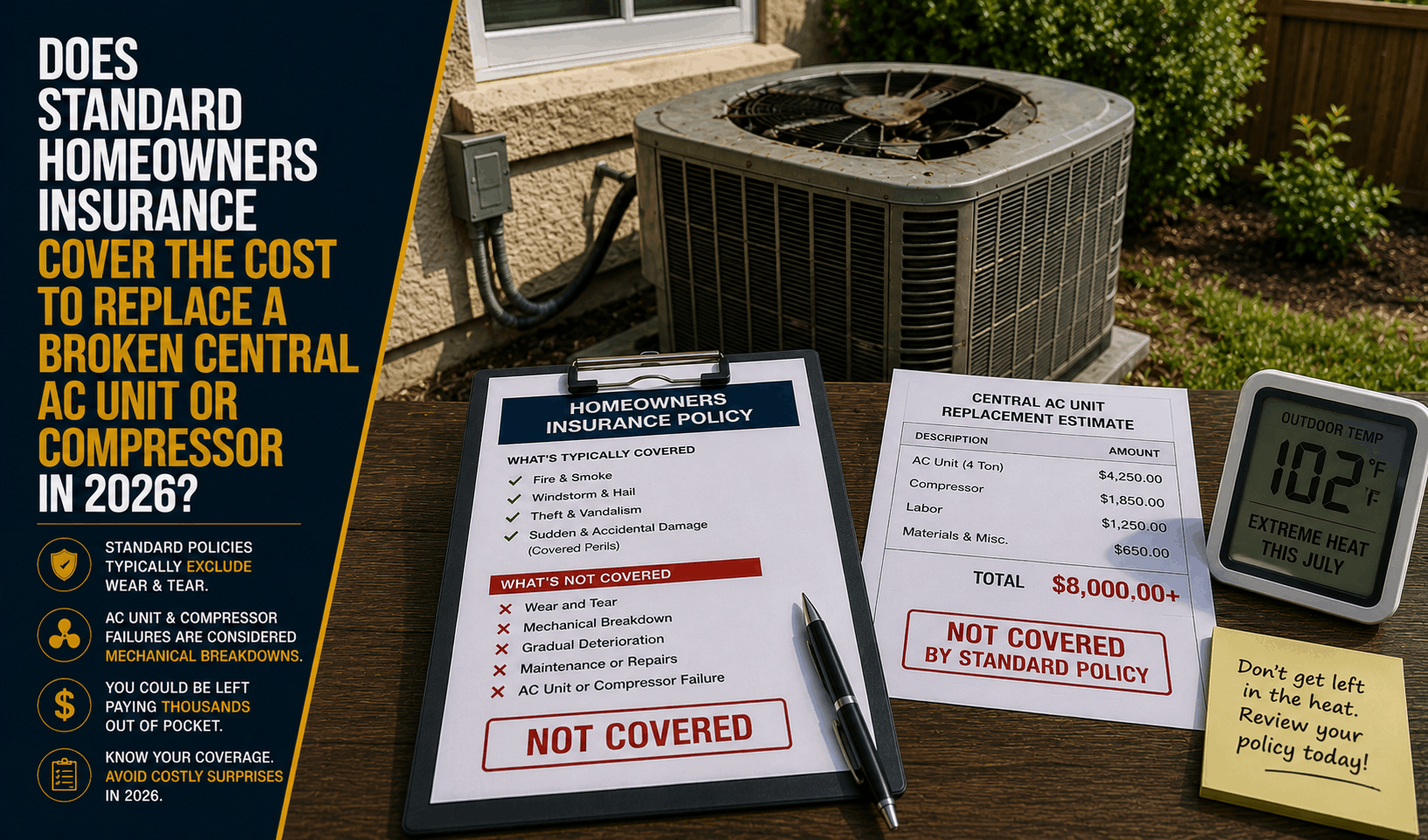
Does Homeowners Insurance Cover Broken AC Units? (2026)
AC broken in the summer heat? Learn why standard homeowners insurance won't pay to replace a broken central AC unit or compressor due to mechanical wear.
Read More →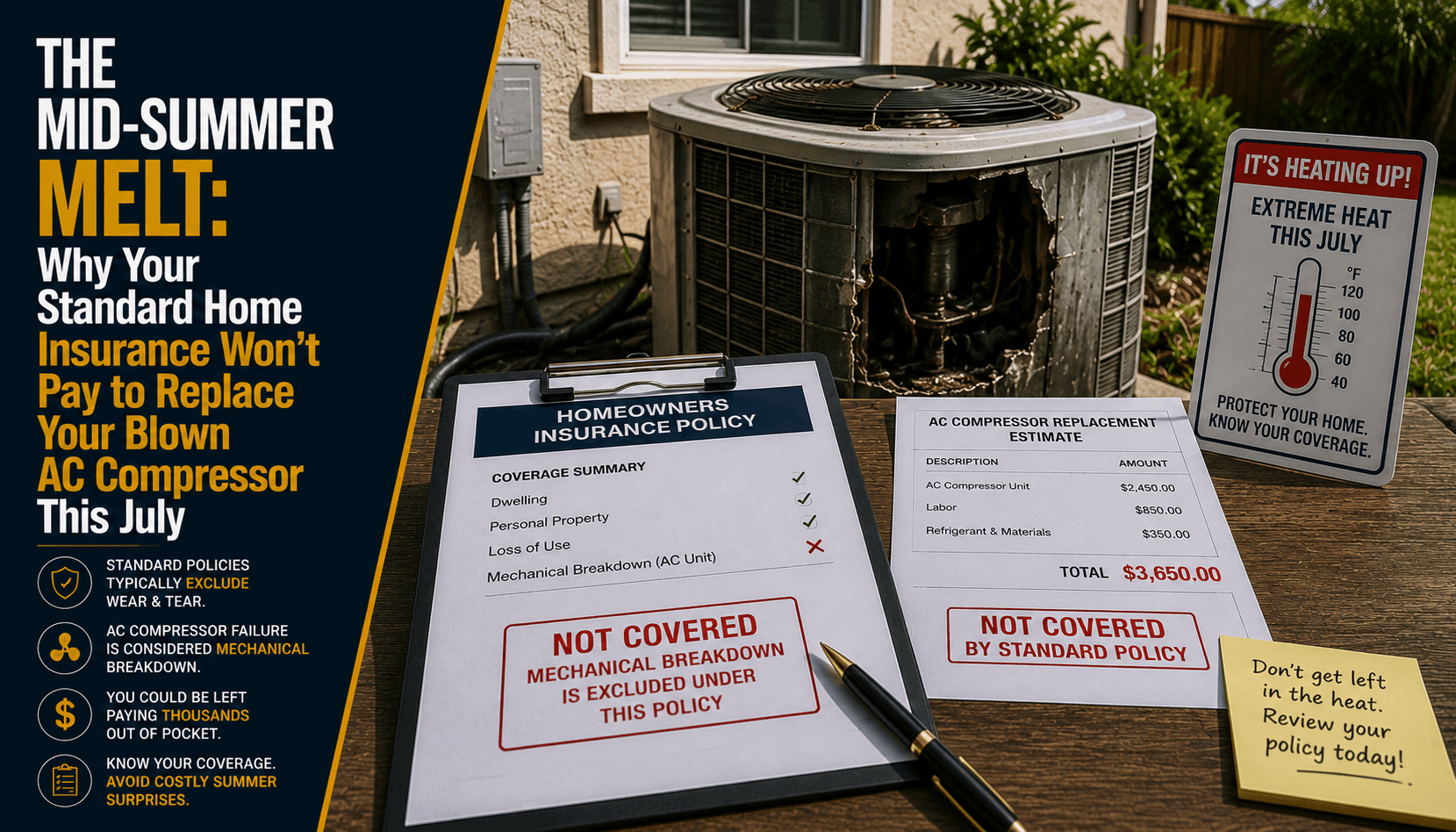
Does Homeowners Insurance Cover Blown AC Compressors? (2026)
AC broken in the July heat? Learn why standard homeowners insurance won't pay to replace a blown air conditioner compressor due to wear and tear.
Read More →